
The ongoing freedom camping crackdown across New Zealand represents a major regulatory shift designed to protect our natural environment by enforcing stricter vehicle self-containment standards. To stay legal and avoid hefty fines under the Self-Containment of Motor Caravans and Caravans Act, vehicle owners must transition to the new regulations. Since 7 June 2025, the prestigious Green self-containment warrant requires a permanently and rigidly fixed toilet. Unsecured portable toilets no longer qualify for this standard, receiving only a restricted Yellow warrant. Staying compliant requires upgrading to certified fixed systems or approved mounting brackets.
For fleet operators, tourism businesses, and private campervan builders, navigating these changes is not merely a matter of environmental stewardship—it is a critical operational imperative. Failure to comply with the updated rules can result in immediate infringement notices, exclusion from premium Department of Conservation (DOC) campsites, and severe reputational damage. This comprehensive guide outlines the technical requirements of the new standards and provides actionable engineering solutions to keep your fleet on the road legally.
The Evolution of New Zealand's Self-Containment Regulations
The regulatory landscape for freedom camping in Aotearoa has undergone its most significant overhaul in a generation. Historically, the voluntary standard (NZS 5465:2001) permitted loose, portable toilets to satisfy self-containment criteria. This loophole led to widespread environmental challenges and prompted local councils and the New Zealand Government to introduce robust statutory controls. The resulting Self-Containment of Motor Caravans and Caravans Act represents a coordinated effort to standardise enforcement and protect vulnerable ecosystems.
Under the new regime, oversight has shifted to central authorities, including the Plumbers, Gasfitters and Drainlayers Board (PGDB), which now manages the register of certified self-containment officers. This transition ensures that every vehicle claiming self-containment is subjected to rigorous, standardised audits. Fleet operators can no longer rely on lax, localised interpretations of what constitutes a compliant vehicle; compliance is now binary, verified, and strictly enforced from Auckland to Southland.
Understanding the Green Warrant vs. Yellow Warrant Standards
The core of the new legislative framework is the distinction between the Green and Yellow self-containment warrants. Understanding this division is vital for commercial operators planning their fleet upgrades:
- The Green Warrant (The New Standard): Required for unrestricted freedom camping on most public land. To secure a Green warrant, the vehicle must feature a toilet that is permanently and rigidly fixed to the vehicle chassis or body. This rule has been strictly active since 7 June 2025.
- The Yellow Warrant (The Legacy/Restricted Standard): Vehicles with unsecured portable toilets are relegated to the Yellow warrant. This warrant severely restricts where a vehicle can legally camp, excluding them from many council-managed areas and prime Department of Conservation (DOC) sites.
To bridge this gap without incurring the massive expense of completely rebuilding vehicle interiors, innovative mounting systems have emerged. By utilising a certified bracket, operators can convert a portable unit into a rigidly fixed system that meets the Green standard. For a deeper technical breakdown of this transition, read our guide on how to make your portable toilet compliant in NZ with the Fix'n'Rail™ solution.
"The era of the loose portable toilet in New Zealand freedom camping is officially over. Compliance now demands permanent, engineered fixtures to protect our shared environment."
How to Stay Compliant Amid the Freedom Camping Crackdown
Achieving compliance under the current freedom camping crackdown requires a systematic approach to vehicle plumbing, waste management, and hardware integration. The focus must be on certified, high-durability components that can withstand heavy commercial use while adhering to PGDB guidelines.
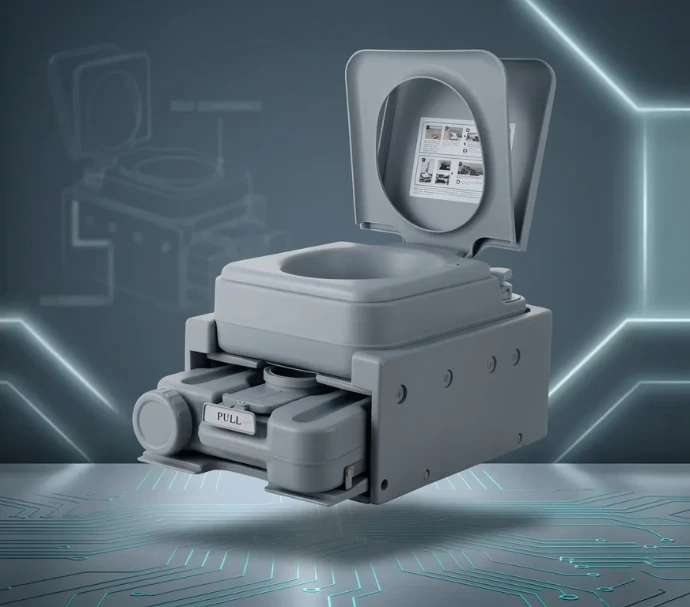
When upgrading your fleet, the toilet system is the primary point of inspection. The Fixed Cassette Toilet - 12L | BlackMOA™ offers an ideal, space-efficient solution that satisfies the permanent fixation requirement of the Green warrant. Featuring a robust 12-litre waste tank and an integrated venting system, this unit is engineered specifically to meet the high standards demanded by modern NZ self-containment audits.
In addition to waste containment, gray water systems must be fully sealed and vented. This involves installing high-quality drainage fixtures like the Kitchen Sink coupled with a White SUS304 Stainless Steel Strainer Drainer Kitchen Sink Drain Threaded Connection. Threaded connections prevent leaks during transit on rugged NZ roads, ensuring that gray water is reliably directed to onboard holding tanks rather than escaping into the environment.
For the traveller's side of the same rules — where you can legally stay and what you need on board — see the guide to the freedom camping rules in NZ.
Strategic Upgrades: Toilet and Waste Engineering for Fleet Compliance
For commercial operators, upgrading a fleet of rental campervans requires balancing compliance with capital expenditure. Completely decommissioning older vehicles is rarely financially viable. Instead, strategic retrofitting offers a high-ROI path forward.
Using the Fix'n'Rail™ system allows operators to secure existing portable toilets to the vehicle's structure permanently. This approach preserves the initial investment in portable toilet hardware while elevating the vehicle to Green warrant status. To explore this cost-effective retrofit pathway, review our article on how the Fix'n'Rail system secures your existing toilet to meet the strict June 2025 mandate.
Beyond plumbing, complete interior integration is crucial. For comprehensive conversions, employing modular systems like The Geli Camper Kit ensures that all onboard systems—from waste management to structural layout—are aligned with modern spatial and legal standards. Pair these layouts with reliable refrigeration solutions such as the RV Compressor Fridge | 16L to maintain high-end utility for long-distance travellers navigating remote regions of Aotearoa.
The Economic Impact of Non-Compliance on Commercial Operators
The financial consequences of failing to adapt to the new self-containment rules are steep. Under the updated legislation, local government authorities and DOC rangers have the power to issue immediate $400 infringement notices to non-compliant vehicles. For rental operators, these fines, combined with negative customer reviews, can severely impact seasonal profitability.
Investing in certified compliance hardware protects your brand reputation and ensures your vehicles remain highly marketable. Our detailed analysis of NZ self-containment rules for 2026 highlights how early adoption of these standards can serve as a key competitive advantage in the highly competitive NZ tourism sector. By proactively upgrading your fleet, you secure access to premium freedom camping destinations, providing your clients with an uninterrupted, premium Kiwi road trip experience. For a real-world look at how businesses have successfully managed this transition, explore our navigating new legislation case study.
Action Plan for Fleet Operators and Builders
To ensure your fleet remains fully operational and compliant with the latest regulations, we recommend the following structured approach:
- Audit Existing Vehicles: Assess your current fleet to identify which units hold Yellow warrants and require upgrades to secure Green warrant status.
- Standardise Your Hardware: Implement uniform toilet and drainage solutions across your vehicles to simplify maintenance and streamline the PGDB inspection process.
- Partner with Certified Installers: Ensure all plumbing modifications are verified by qualified professionals to guarantee hassle-free certification.
Ready to secure your fleet's compliance? Shop our range of certified sanitation systems and conversion hardware today to stay ahead of the regulations.
What is freedom camping crackdown?
The freedom camping crackdown refers to the strict enforcement of updated self-containment regulations in New Zealand, designed to eliminate environmental waste by requiring campervans to have certified, permanently fixed toilets to camp on most public and conservation land.
How to navigate the freedom camping crackdown?
To navigate the crackdown successfully, vehicle owners must upgrade their waste systems to meet the Green self-containment standard. This requires replacing loose portable toilets with permanently fixed systems or securing existing toilets with an approved, rigid mounting bracket like the Fix'n'Rail™ system.
Where to buy compliant gear for the freedom camping crackdown in New Zealand?
Compliant sanitation gear, including fixed cassette toilets, certified mounting brackets, and threaded gray water drainage systems, can be purchased directly from specialised commercial suppliers like Myst Enterprise. Explore our online store for fully certified components designed for NZ standards.
What is the best setup to avoid a freedom camping crackdown fine?
The best setup to guarantee compliance and avoid fines is a certified Green warrant configuration. This includes a permanently mounted toilet, such as the BlackMOA™ Fixed Cassette Toilet, a fully sealed and vented gray water system with threaded connections, and an official self-containment certificate displayed on your windscreen.